
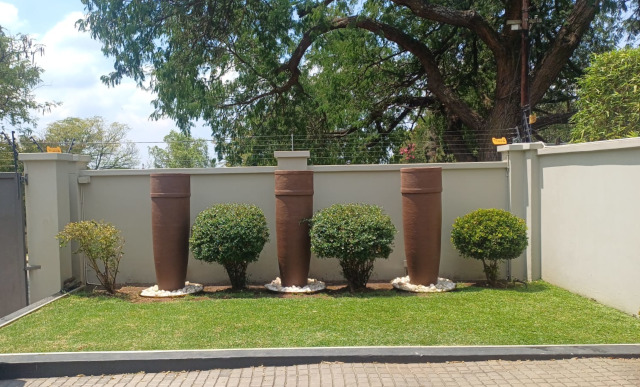
The biggest problem with lawns is compaction.
Any traffic on a lawn compacts the soil under humans or pets. To remedy this you need to aerate the grass. This is done by sticking a garden fork into the grass till the fork is as deep as you can get it. Sometimes the soil is rock hard. You can water the grass before to help. When the fork is in the soil tilt it 45 degrees. Pull out the fork. Do this every 30 cm.
Then we need to fertilize. Like a human would take vitamins. 12:1:5 is my recommendation. This mixture also changes the pH of the soil that reduces certain weeds in the grass with no extra effort. Well worth it.
When you fertilize you need to water. If you don’t water enough you can burn the grass. A thin layer of lawndressing is then applied. This needs to be soft and light. Leave time for the grass to grow. Do not cut it too short.
Common mistakes.
- Planting the wrong grass for your conditions. LM for shade and Kikuyu for sun. There are other options but these are the most widely used. The grass also knits itself together. Other types are individual plants and the grass does not recover. It needs to be replaced. Dog urine kills it and you cannot really walk on it at all.
- Cutting lawn too short. Grass makes a canopy to cover the roots. Put the lawnmower on the highest setting to avoid grass dying due to roots being exposed.
- Using heavy soil on top of grass. Use only a very fine and light lawndressing. Heavy topsoil or compost smothers the grass.
The use of any kind of manure is not advised. Manure changes the pH of the soil. Unless you know exactly the pH of the soil beforehand and understand the impact of the manure. This is why you find grass growing well and then suddenly dying or making yellow patches.
We always recommend a pH balance organic mix. If you use chemical fertilizer you also change the pH that leads to problems down the line.
The same principle applies for coffee grinds, Epson salts or egg shells or any other organic matter.


